

Acoustic panels used to be the kind of thing you’d only see in recording studios or bland corporate boardrooms—practical, yes, but far from inspiring. Fast forward to now, and they’re one of the most stylish tools in a designer’s playbook. And no, you don’t need to be an audiophile or own a massive home theatre setup to make them work for you.
If you’re trying to reduce echo in your home office or just want your space to look a bit more put together, acoustic wall panels are no longer just about sound—they’re a proper design feature. The secret? How you arrange them.
Below are five acoustic panel layouts that designers absolutely swear by—along with a few reasons they’re so popular (and how you can make them work in your space).
1. The Symmetrical Grid
Best for: Modern, minimalist interiors
Why designers love it: It’s neat, balanced, and always looks polished.
This layout is exactly what it sounds like—a clean, grid-like arrangement of identical acoustic treatment panels in Singapore. It’s popular in minimalist homes, modern flats, and workspaces where order and uniformity help create a calm environment.
It works especially well on larger walls, like behind a sofa or bed, where the even spacing brings a sense of visual structure. Even better, it’s very beginner-friendly—no need to be a design expert to pull it off.
Why it works: “Symmetry is naturally calming to the eye,” says just about every interior designer ever. “And when you add sound absorption to the mix, you’re hitting two birds with one stylish stone.”
- Use neutral shades for a sleek look
- Works beautifully with square or rectangular panels
- Easy to extend if you want to scale it up later
Pro tip: Want to add subtle interest? Try alternating slightly different textures in the same colour—for example, mix matte and linen-look panels.
2. The Vertical Slat Feature Wall
Best for: Cosy living rooms and elegant bedrooms
Why designers love it: Adds instant texture and warmth
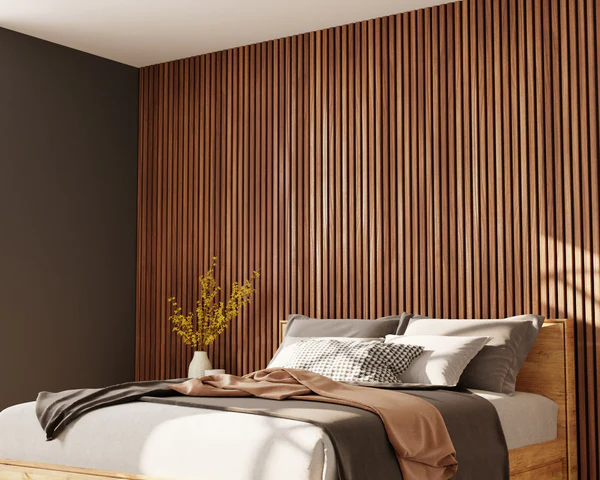
One of the most in-demand looks right now? Vertical wood slats. Not only are they fantastic at breaking up large, boring walls, but they also draw the eye upwards, making your ceilings look higher than they really are.
These panels can be made from acoustic-friendly materials that help with noise control, especially in echo-prone rooms with hard flooring. Designers love how they bring in a sense of natural calm without needing any bold colour or heavy artwork.
- Ideal for Scandinavian, Japandi, or rustic-inspired interiors
- Use behind a bed, media unit, or along entry hallways
- Can be installed floor-to-ceiling for a dramatic look
Design tip: Pair with soft lighting (think wall sconces or LED strips) to really highlight the grain and texture in the evenings.
3. The Geometric Cluster
Best for: Creative spaces and playful family homes
Why designers love it: It turns sound absorption into wall art
If you’re someone who likes to push boundaries or you’ve got a quirky, creative flair, this layout is for you. Instead of sticking to rectangles, this trend embraces hexagons, triangles, and diamonds arranged in irregular but intentional clusters. Think of it as decorating with function in mind.
It works brilliantly in children’s rooms, art studios, or communal areas where you want to keep the mood light and the acoustics under control.
- You can go bold with colour or keep it tonal
- Super flexible—expand or reshape as your needs change
- Looks great even with partial wall coverage
Styling tip: Choose three shades from the same colour family and arrange them randomly for a subtle ombré effect. Or go multicoloured for a more vibrant energy.
4. The Partial Panel Wrap
Best for: Open-plan homes and multifunctional spaces
Why designers love it: It defines areas without closing them off
We all know open-plan living looks great on Pinterest, but in real life? It can be loud, chaotic, and hard to manage acoustically. Enter the partial panel wrap—a clever design trick that frames a small part of your room with acoustic panels to subtly carve out a “zone” without building actual walls.
It’s perfect for wrapping around:
- A small desk area in the corner of your living room
- A reading nook by the window
- A dining space that needs a bit of separation from the kitchen chaos
Designer trick: Combine wall panels with a matching rug and overhead pendant light to complete the “room within a room” look.
5. The Full Feature Wall
Best for: Dramatic, high-impact interiors
Why designers love it: It turns a practical necessity into a major design moment
Want to go all-in? Then the full feature wall is your answer. It’s bold. It’s beautiful. And it’s incredibly effective at both improving acoustics and adding serious visual weight to a room.
This layout involves covering an entire wall—top to bottom, side to side—with acoustic panels. Designers often do this behind a TV setup, in a media room, or behind the bed to create a plush, hotel-style backdrop.
- Best suited to rooms where sound matters (and style does too)
- You can layer in lighting and shelving for extra function
- Gives your space that “custom-designed” feel
Luxury look: Use velvet-style fabric panels or wood slats with metallic accents (like brushed gold or black trims) to take it to the next level.
Final Thoughts: Layout Matters More Than You Think
Here’s the thing: acoustic panels are no longer just a sound solution—they’re a style statement. And how you arrange them can completely change how your space looks and feels.
So instead of slapping up a few panels wherever they’ll fit, take a cue from the pros. Think about how you want your room to function, what atmosphere you want to create, and let the layout lead the design.
Form and function? Yes, please.
