

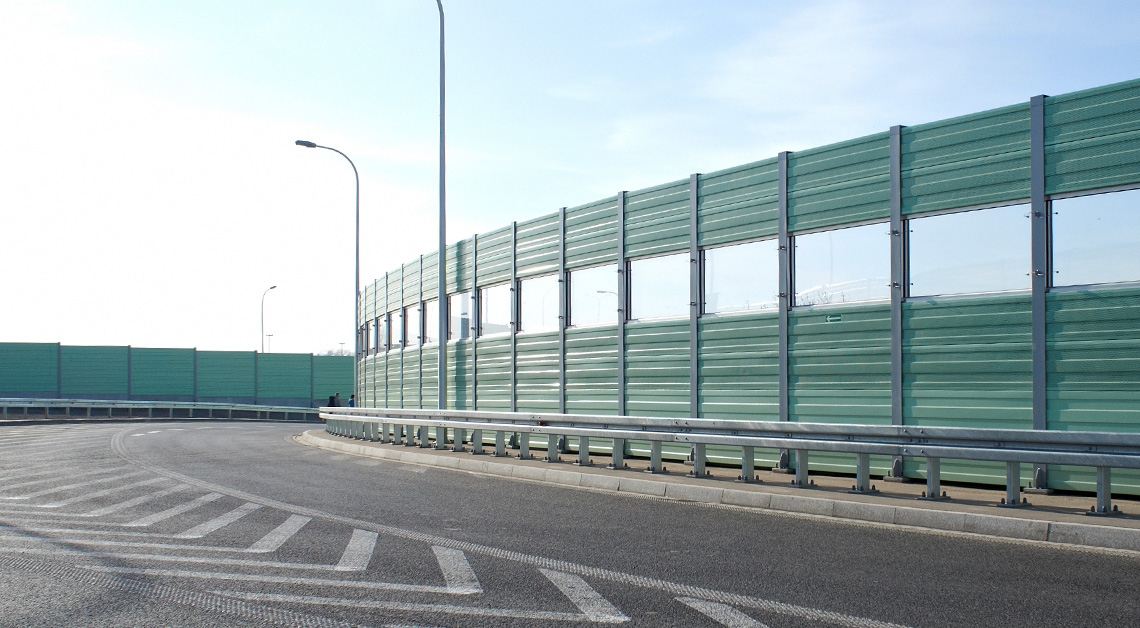
Noise barriers are one of the most common tools used on construction sites, industrial facilities, and even in commercial environments. They are practical, visible, and relatively easy to deploy. But here is the reality: barriers alone are rarely enough, especially in complex or high-impact situations.
Effective noise control is almost always a layered approach. The best results come from combining barriers with other methods that address sound at different stages, from how it is generated to how it travels and how it is perceived.
So when exactly should you go beyond barriers and start combining strategies? Let’s walk through it in a clear, practical way.
What Noise Barriers Do Well (And Where They Fall Short)
Before combining methods, it helps to understand what barriers are designed to do.
- Block direct sound paths
- Reduce noise transmission from source to receiver
- Help control line-of-sight sound spread
They are especially effective when placed close to the noise source or along the site boundary.
However, barriers have limitations:
- They cannot eliminate noise completely
- They struggle with reflected sound in dense environments
- Low-frequency noise can pass through or around them
- Gaps or poor placement reduce effectiveness quickly
This is why relying on barriers alone can lead to inconsistent results.
When Noise Levels Are Still Too High
The most obvious sign you need additional methods is simple: the noise is still too high even after installing barriers.
This often happens in:
- Demolition or piling works
- Heavy machinery operations
- Sites close to residential areas
In these cases, barriers absorb some noise, but not enough to meet compliance or comfort levels.
What to Add
- Equipment control: Use quieter machinery or fitted silencers
- Enclosures: Surround particularly noisy equipment with partial or full acoustic covers
- Scheduling adjustments: Limit high-noise tasks to less sensitive hours
These methods reduce noise at the source, making the barrier more effective overall.
When Working in Dense Urban Environments
City projects introduce a different kind of challenge. Sound does not just travel outward, it reflects off surrounding buildings and comes back.
Even with barriers in place, reflected noise can still reach nearby residents or businesses.
What to Add
- Acoustic sheets or absorptive barrier surfaces to reduce reflection
- Strategic equipment placement to minimise reflective pathways
- Zoning to isolate noisy activities within smaller sections
In urban environments, combining absorption with blocking is essential.
When Low-Frequency Noise Is a Problem
Low-frequency noise, such as that produced by heavy equipment or generators, is harder to control. It travels further and penetrates materials more easily.
Standard barriers are less effective against these frequencies.
What to Add
- Thicker or multi-layered barriers
- Increased distance between source and receiver (if possible)
- Vibration isolation systems to reduce noise at its origin
Addressing low-frequency noise usually requires both physical and mechanical solutions.
When Space Is Limited
Constrained sites often prevent ideal barrier placement. You may not be able to position barriers close enough to the source or build them high enough for full coverage.
This reduces their effectiveness.
What to Add
- Localised enclosures around specific equipment
- Portable acoustic screens that can be repositioned easily
- Operational controls such as limiting simultaneous noisy activities
In tight spaces, combining smaller targeted solutions often works better than relying on one large barrier.
When There Are Strict Regulatory Requirements
Some projects operate under strict noise limits, especially near residential zones, hospitals, or schools.
Even a well-installed barrier may not be enough to consistently meet these limits.
What to Add
- Noise monitoring systems for real-time feedback
- Work sequencing strategies to control peak noise periods
- Additional acoustic layers such as double barriers or internal enclosures
Compliance often requires a combination of physical, operational, and monitoring measures.
When Complaints Start Increasing
Community complaints are often the first real-world indicator that current measures are not working.
Even if noise levels are technically within limits, perception matters. Repetitive or sharp sounds can still cause frustration.
What to Add
- Improved barrier placement or sealing gaps
- Sound masking techniques in some environments
- Clear scheduling communication with nearby residents
Noise control is not just about decibels. It is also about how sound is experienced over time.
When Work Phases Change
Construction sites evolve. What works during one phase may not work in the next.
For example:
- Demolition requires heavy noise control
- Structural work may shift noise sources
- Finishing work may reduce overall noise but increase sensitivity
What to Add
- Modular barrier systems that can be repositioned
- Phase-specific controls such as temporary enclosures
- Regular reassessment of noise strategy
Combining methods allows you to adapt without rebuilding your entire system.
The Layered Approach to Noise Control
The most effective noise control systems follow a simple principle: control sound at multiple points.
Instead of relying on a single solution, they address:
- Source – reduce noise where it is created
- Path – block or absorb noise as it travels
- Receiver – minimise impact on people or surrounding areas
Noise barriers mainly address the second point. Combining them with other methods ensures all three areas are covered.
Common Mistake: Over-Relying on One Solution
One of the most common issues in noise management is expecting a single method to solve everything.
Even the best barrier cannot compensate for:
- Poor equipment maintenance
- Inefficient site layout
- Overlapping noisy activities
Combining methods is not about overcomplicating things. It is about addressing the problem from multiple angles.
Final Thoughts
Noise barriers are an essential part of any noise control system, but they are only one piece of the puzzle. Their effectiveness depends on how well they are supported by other strategies.
You should consider combining barriers with additional methods when:
- Noise levels remain high
- The site is in a dense or sensitive environment
- Low-frequency noise is present
- Space limits proper installation
- Regulations are strict
- Complaints continue
- Site conditions change over time
The goal is not to eliminate noise completely, which is rarely possible in active environments. Instead, it is to manage it in a way that is controlled, compliant, and as unobtrusive as possible.
When barriers are combined with smart planning and complementary solutions, they become far more effective than when used alone.
