

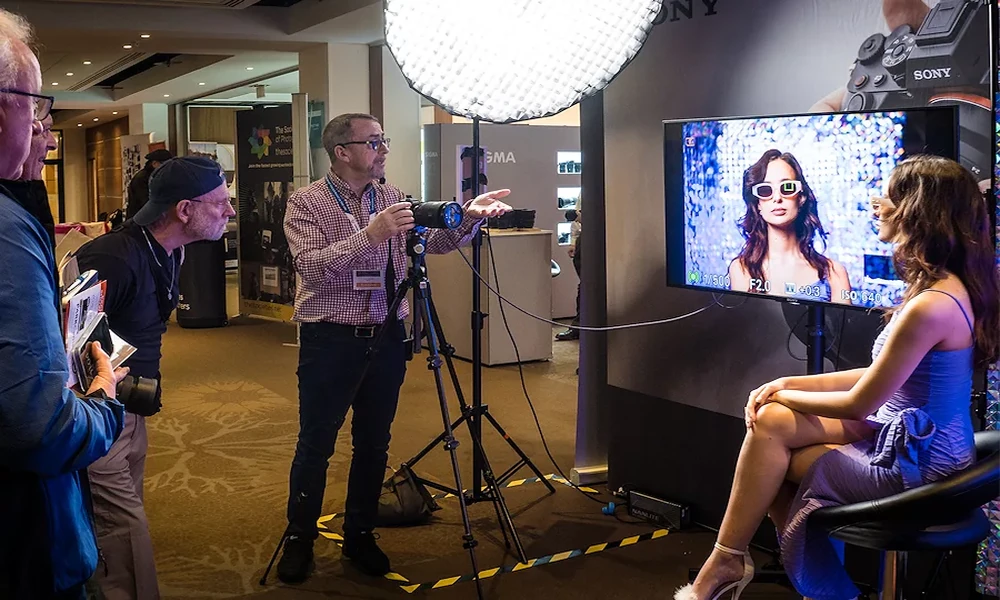
Title: Trade-Show Photography When Every Booth Competes for Attention
A trade show is visually dense by design. Screens, banners, demonstrations, samples, staff, and visitors compete within narrow aisles, often under mixed lighting. Event photography has to distinguish one exhibitor’s story without pretending the surrounding floor does not exist. The brief should define the evidence the booth needs, the interactions that can be published, and the windows when clean views are realistic. Strong coverage makes the exhibit understandable at a glance and useful after the crates are packed.
Decide what the booth must prove
Begin with the exhibit’s communication job. A product launch may need the new object, interface, or demonstration in use. A service business may need expert conversations and scheduled sessions. A recruitment presence may prioritize team members and candidate interaction. A partner pavilion may need collaboration across several brands. Choose three to five visual proofs instead of treating general booth activity as the outcome.
Identify fixed program moments and repeatable demonstrations. A keynote handoff or visiting executive may happen once; a product specialist may be able to run a concise demo several times. Place each priority on the show schedule with a responsible contact. This prevents the photographer from waiting beside a dormant display while an important conversation happens elsewhere.
Create a small reference sheet with product names, approved interfaces, required partners, and visual restrictions. If a prototype, unreleased screen, customer record, price, or competitor comparison cannot appear, say so before coverage begins. Busy booths make last-minute image policing unreliable.
Capture the exhibit before the aisle fills
Arrange a short controlled window before opening or during a quiet access period. Photograph the approach, complete footprint, primary message, product areas, meeting space, material details, and any distinctive construction. Clear shipping cases, cleaning supplies, loose cables, drinks, and personal items while keeping the setup truthful.
Show organizers may restrict early access, stands, flash, or positions outside the purchased footprint. Confirm credentials and floor rules in advance. If house lighting changes at opening, capture a reference under both conditions. LED walls and illuminated signs may need exposure choices that differ from nearby faces or physical products.
Leave room in several compositions for text and crops. A clean wide frame may become a report header, web banner, sales slide, or case-study opener. Vertical details can support social formats. These variations are easiest before visitors fill every open part of the design.
Photograph interaction without obstructing business
Once the floor opens, the booth belongs to its visitors and staff. Agree on positions that do not block entrances, accessible routes, product sightlines, or neighbouring exhibitors. Use staff cues sparingly. A real specialist explaining a feature will usually create better evidence than repeatedly stopping the conversation for posed eye contact.
Teams planning trade-show event photography with Indigo Visual can ask how coverage will move between controlled booth images, candid interaction, and scheduled demonstrations. The answer should account for crowd patterns, mixed lighting, important participants, and any requirement to deliver images before the show closes.
Visitor privacy requires a practical plan. Follow organizer notices and exhibitor policies, make posed participation voluntary, and provide a way to flag restricted conversations or people. Wider atmosphere can sometimes establish activity without making an identifiable visitor the subject. Remove frames that reveal badges, documents, or screens in a way the attendee would not reasonably expect.
Photograph conversation in stages: invitation, explanation, hands-on use, response, and next step where visible. Not every exchange will produce the full sequence, but waiting for meaningful action creates more useful pictures than collecting rows of people facing a counter. Product handling should be accurate, safe, and consistent with the way the exhibitor wants it represented.
Coordinate people, products, and proof
Provide a roster for executives, specialists, partners, customers who have agreed to participate, and any media visit. Include correct names, titles, arrival windows, and the priority scene for each person. The photographer should not have to recognize a leader from a website headshot across a crowded hall.
Schedule compact team photographs when coverage and staffing permit. Decide whether the goal is the full show team, functional groups, partner representatives, or a leadership portrait. Capture them without leaving the booth unable to serve visitors. A precise five-minute call is more credible than asking everyone to remain available all afternoon.
Numbers should come from the systems that measured them. Photography can show a busy demonstration, conversation, or queue, but it should not be used to claim attendance, leads, or conversion that the image cannot establish. Pair the gallery with verified show data when reporting performance, and keep captions descriptive rather than promotional guesses.
Deliver by decision, not camera order
Define a small on-show selection for announcements, partner sharing, or next-day outreach. It should include a clean exhibit view, product evidence, human interaction, a required person or partner, and an atmosphere frame. Rapid editing still needs checks for colour, confidential information, names, and restrictions. Speed is valuable only when the file is safe to publish.
Organize the complete gallery around future decisions: exhibit design, products, demonstrations, team, visitors, partners, sessions, and floor context. Add names and product terms where verified. Record which booth elements were temporary or specific to this edition so a later campaign does not present old signage or an obsolete prototype as current.
Review the gallery with both the exhibit owner and communications lead. One can confirm technical accuracy and partner obligations; the other can assess channel fit and publication risk. Consolidate their choices before distributing a large download link to sales teams and external partners.
After the show, note which visual proofs were missing and which images people actually reused. That review might reveal the need for a quieter demonstration slot, a better staff roster, more vertical compositions, or a second operator during an overlapping session. Feed those findings into the next exhibit brief while the operational details remain fresh.
Trade-show photography becomes useful when it cuts through density without falsifying the environment. Define the booth’s evidence, protect controlled access, respect live conversations, and describe the final files carefully. The resulting library can support sales, partnership, design, and event decisions long after the floor has moved on.
